Ala eh : Balik Tan-aw
By : Renz Imiel Nakpil
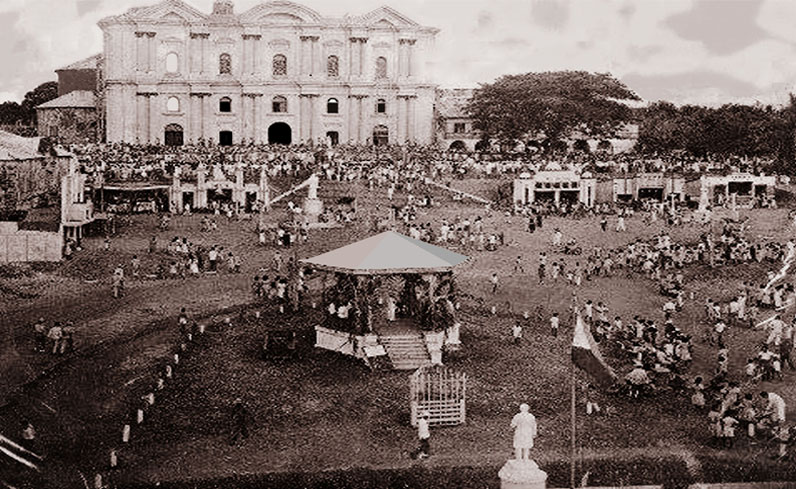
Batangas is a province of beauty, culture, tradition, faith and especially history. As a Batangueño, I do personally believe that our own rich culture and traditions are deeply connected on how we dealt the course of history dating back from pre-colonial era up to the present. We Batangueños have a rich history and I believe that Batangas Province is one of the provinces here in the country that has enormous historical background that shaped the lives, culture, traditions and faith of the Batangueños.
Pre-Colonial Era
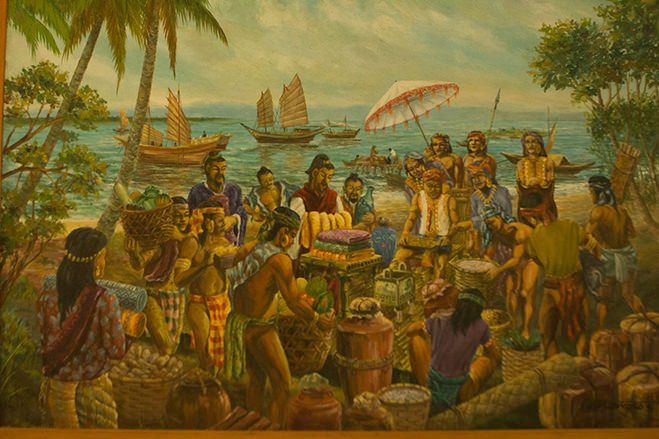
Long before the Spanish Colonization here in the Philippines, civilization already sprout in the province especially the native settlements in the mouth and river sides of Pansipit River, a major tributary of Bombon Lake ( Taal Lake ). Settlements also thrived in the region of Balayan, Nasugbu and Taal. The natives had been exchanging goods by means of trade with the Chinese dating back form Yuan Dynasty until the early part of Ming Dynasty. The also had contact with the Japanese and the Indians during the 13th –14th century.

Archaeological artifacts, show that even before the arrival of the Spaniards in the region the natives or the “Tagalogs”, especially the Batangueños had a advance civilization reflected on the artifacts such as jewelries made from chambered nautilus shell that has patterns and some small holes were drilled by some tubes. The jewelries reflected the fact that even before the Batangueños known the concept of beauty.
The pre-colonial Batangueños were mainly influenced by the Indians due to their trade relations with them. Ancient potteries were depicted with the different Buddhist images and icons such as depicted in the different artifacts that were found in Municipality of Calatagan. A clay medallion depicting the images of Buddha were found and according to the archaeologist, the image and icon in the ancient pots was the same as the portrayal of those image of Buddha from Siam, India and Nepal.
Early Batangueños believed in superstitions and the use of amulets. They also believed in supreme beings ruling to the living such as “ Bathala”, a supreme god that they believed ruled unto them. Early Batangueños also had deep connection to the nature due to their beliefs of spirits and supreme entities. The presence of religion in the province proved that early Batangueños had a advance civilization before the arrival of the Spaniards as stated in a Chinese scripture of Wang The Ming that Batangas was the centre of Tagalog civilization which he identified as “Mayi” that stretched in the nearby provinces of Luzon.
Spanish Colonial Period ( 1565 – 1898 )
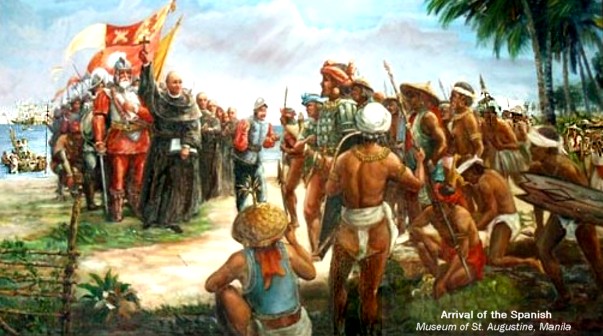
During the Spanish Conquest of the province in 1570, the Spanish forces led by two Spanish generals, Martin de Goiti and Juan Salcedo explored the coast of the region on their way to Islamic kingdom of Manila. On their way they reached the Malay settlements at the mount of Pansipit River. The town of Taal was founded in 1572 by the Spaniards and they began the construction of convent and stoned church later on.
In 1578, the Spanish government officially founded the Provincia de Bonbon through Fr. Esteban Ortiz and Fr. Juan de Porras. The name “Bonbon” was the same name that the natives called the region. In 1581, The Spanish government abolished the Bonbon Province and erected a new province called as Balayan Province which composed of present-day Batangas, Mindoro, Marinduque, Southeast Laguna and Camarines. In 1574, the Taal Volcano had a destructive eruption devastating the old town of Taal (San Nicolas). The capital was relocated in Batangan (Batangas City) in fear of another eruption.
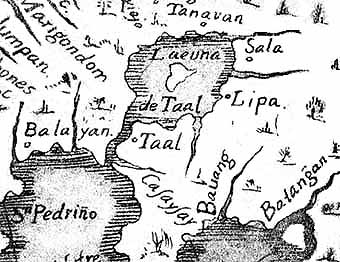
The first missionaries that came to the province were the Franciscans specifically in Taal. The town became the first Spanish settlement in Batangas and one of the earliest in the country. The Augustinians, another missionaries that set foot in Taal, founded the town in the place called Wawa ( San Nicolas ). They began to Christianized the neighboring communities such as Balayan and later all settlements around the Bombon Lake (Taal Lake). The Augustinians were the first missionaries in the diocese and they remained until the Philippine Revolution of 1896. The first centers of Christianity in the province were Taal, Bauan, Sala, Lipa and Tanauan, settlements around the Bombon Lake. The Augustinians were the ones who completely Christianized the region around the Bombon Lake by preaching on the locals by learning the natives’ own language and translating manuals of devotion in Tagalog. Numerous parishes were founded with the arrival of the Augustinians. In 1572, Taal parish was founded by the Augustinians followed by Batangas parish in 1581, Bauan parish in 1596, Lipa parish in 1606. In 1774, Balayan parish was founded, Nasugbu parish in 1582 and Lemery parish in 1868.
During the Spanish Colonial Period the town of Nasugbu played a big part during the galleon trade and witnessed the first ever recorded battle between two European forces in Asia in the Fortune Island, Nasugbu, Batangas. The locals discovered a sunken galleon ship that contained goods from the galleon trade.
During The Philippine Revolution of 1896, Batangas was one of the eight provinces that revolted against Spain and also one of the provinces placed under Martial Law by Spanish Governor-General Ramon Blanco on August 30, 1896. Batangas was the birthplace of Marcella Agoncillo, the one who made the Philippine Flag and Apolinario Mabini, the “brains of the Philippine Revolution.

During The Philippine Revolution of 1896, Batangas was one of the eight provinces that revolted against Spain and also one of the provinces placed under Martial Law by Spanish Governor-General Ramon Blanco on August 30, 1896. Batangas was the birthplace of Marcella Agoncillo, the one who made the Philippine Flag and Apolinario Mabini, the “brains of the Philippine Revolution.
American Rule ( 1898 – 1946 )
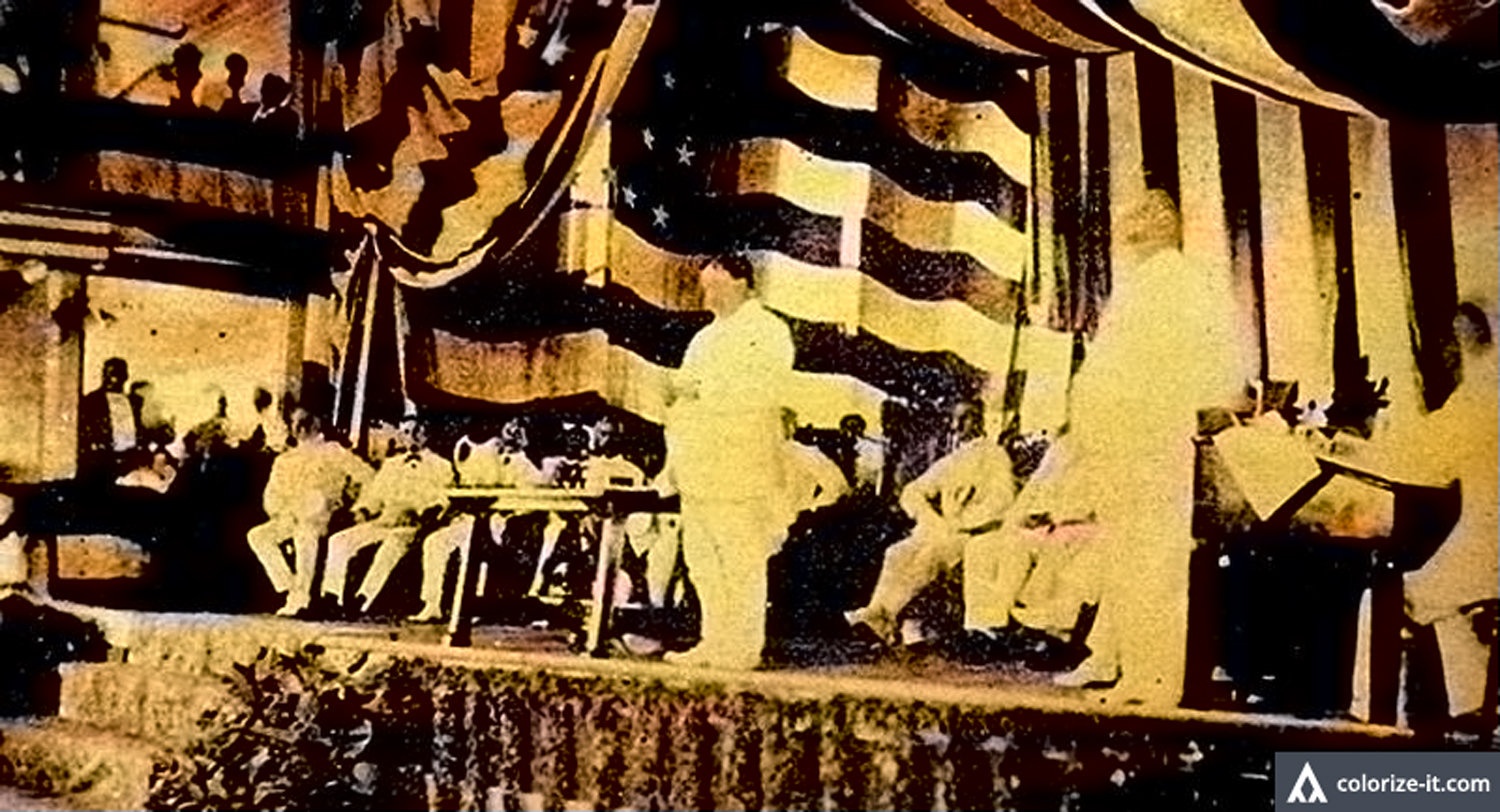
After the defeat of the Spaniards in 1898, the Batangueños continued to fight another foes, the Americans when they invaded the Philippines. Batangas was also in the watch list of the Americans and when they outlawed the raising or waving of the Philippine Flag anywhere in the country, Batangas was one of the regions in the country where the revolutionaries chose to spread their beliefs and propaganda. Revolutionaries chose to propagate them by means of performing arts such as plays that depicted nationalism such as the performance of Tanikalang Ginto led to the arrest of the company and also the audience. Performing propaganda-related plays was later banned in the country. General Miguel Malvar was recognized as the last general who surrendered to the Americans during the Philippine-American War in 1901.
Japanese Occupation ( 1941 – 1945 )
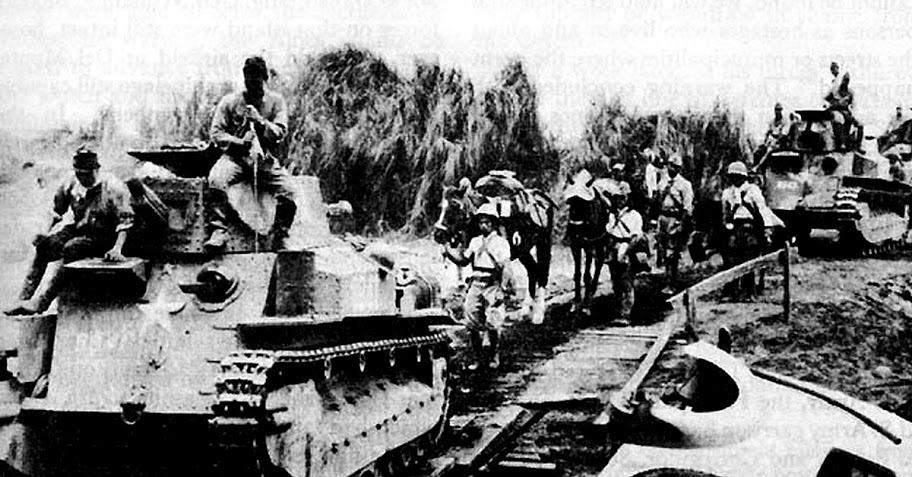
On the early year of Second World War, Batangas also did not escape the destruction and horrors of war. After the attack on Pearl Harbor in December 7, 1941, the Japanese Forces attacked the Philippines by launching air strikes throughout the country. The air raids resulted to the destruction of Batangas Airport located in Batangas City, of which nothing remains today. Batangas was also the place of heavy battles between the Philippine Army Air Corps and the Japanese A6M Zero Fighter Planes that took placed in December 12, 1941 and it was led by notable Capt. Jesus Villamor against the Japanese bombers. When the American – Filipino Forces surrendered to Japanese Imperial Army in Bataan in 1942, the province was ultimately abandoned and fall to the direct control of the Japanese. During the occupation the Japanese Imperial Army committed many atrocities to the civilians resulted to the deaths of many Batangueños: 328 people in Bauan, 320 in Taal, 300 in Cuenca, 107 in San Jose and 39 in Lucero.
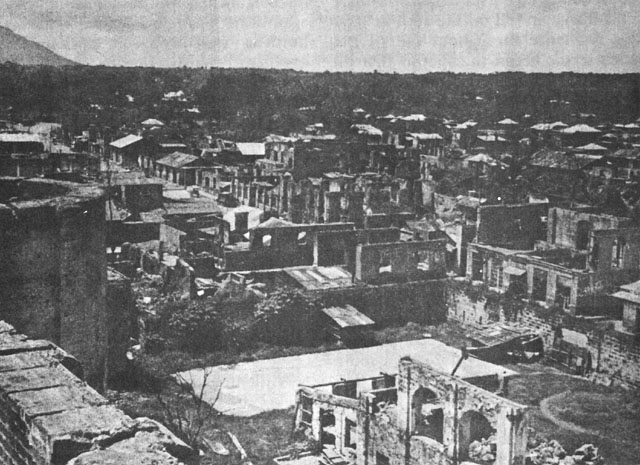
During the Liberation Campaign of Allied Forces in the Philippines, the 11th Airborne Division under the U.S. Eight Army landed on the shores of Nasugbu, Batangas on their way to liberate Manila. The 11th Airborne Division Together with the 158th Regimental Combat Team liberated the towns of Balayan and from those of Batangas Bay in March 11, 1945. The town of Mabini was captured in March 16, 1945 by the 158th RCT. Later different towns were liberated by the different military divisions of U.S. Army such as Santo Tomas, Tanauan, Batangas City and Lipa. The remaining Japanese forces retreated to the mountains such as Mt. Maculot in Cuenca to defend the province from the Allied forces. By the end of April 1945, Batangas was liberated and fully secured for the Allied control through the efforts of American – Filipino Forces and the Guerilla fighters in the province. The campaign resulted to 390 casualties in which 90 of it were dead while the Japanese lost 1490 men during the battle. The province was fully liberated, thus ending the Japanese atrocities in the area.
As a Batangueño, I find it interesting to know the whole history of our province because knowing these information can help to learn and understand my roots. Batangas is not only a beautiful place but also a place of heroism, cultural identity and faith. I realized that my province is a historical place that everyone of its inhabitants must know to learn the background of their identity. Batangas is full of beauty and rich in history dating back from pre-colonial era up to the present.
References : History. (n.d.). Retrieved from http://www.batangas.gov.ph/portal/history/
 Batangas : Balik Tan-aw